 blog
How to Use Personal Training for Weight Loss That Lasts
Last Updated: November 25, 2026
Quick Summary
Personal training for weight loss is a structured coaching relationship in which a certified trainer builds and adjusts an exercise program around your body, schedule, and health history. A trainer should run a fitness assessment, agree on milestones, and track progress with more than a scale, including body composition, strength numbers, and waist measurement.
- The U.S. personal trainer market is estimated at $12.1 billion in 2026, per IBISWorld data.
- Three to four training sessions per week is a commonly suggested frequency for many people pursuing fat loss.
- Beginners should train two to three sessions per week for 30-45 minutes each.
- Add a little load or a rep before you add a day, and hold the schedule for four weeks.
- Skipping the health history conversation is the most common beginner mistake.
Table of Contents
- Why Personal Training for Weight Loss Beats Going It Alone
- What Personal Trainer Cost Looks Like and What You Get
- Personal Training for Beginners: Starting From Scratch Safely
- Building a Weight Loss Workout Plan That Fits Your Life
- How Often Should You Work Out to Lose Weight?
- How to Choose a Trainer and What to Expect From Coaching
- Frequently Asked Questions
Why Personal Training for Weight Loss Beats Going It Alone
Personal training for weight loss is a structured coaching relationship in which a certified trainer builds and adjusts an exercise program around your body, schedule, and health history. The U.S. personal trainer market is estimated at $12.1 billion in 2026, per IBISWorld's personal trainer market data, which tells you how many people are paying for guidance rather than guessing.
Many people don't stick with fitness plans because the plan isn't adjusted when life gets in the way.
What the Research Says About Coaching and Adherence
Adherence is the whole game.
The NASM 2026 State of the Personal Trainer survey of 1,133 active trainers also flags GLP-1 medications as a disruptive force in the field. Coaching is shifting from "count reps" to managing a body that's changing under medication.
Setting Realistic Weight-Loss Goals With a Trainer
Realistic goals come from measurement, not enthusiasm. A trainer should run a fitness assessment, agree on milestones, and track progress with more than a scale: body composition, strength numbers, waist measurement, and how daily tasks feel.
Weight management dominates new program design. According to Hyperhuman's 2026 fitness content report, "lose weight" appeared in 44.7% of new programs in 2026, up 19.1 percentage points year over year. Most of those programs will fail on timelines, not effort.
| Goal Type | Realistic Timeframe | How to Measure It |
|---|---|---|
| First 4 weeks | Weeks 1-4 | Session attendance, form quality |
| Strength baseline | Weeks 4-8 | Load lifted on core lifts |
| Body composition shift | 8-12 weeks | Waist measurement, photos |
| Weight maintenance | 3-6 months | Consistency across 12 weeks |
What Personal Trainer Cost Looks Like and What You Get
Personal trainer cost depends on format, frequency, and whether the trainer travels to you. For current pricing and a quote, contact Practical Fitness directly. Rather than dodge the number, it helps to understand the factors that move it up or down so you can compare quotes apples to apples.
When comparing quotes, multiply the per-session rate by the number of sessions you'll actually attend and add any assessment fees, then compare that monthly figure across providers.
If a provider can't describe what happens in week six, the price doesn't matter. You can review our fat loss menu to see how nutrition support pairs with training.
In-Home vs. Gym Training: Comparing the Value
In-home training can suit busy households and beginners who feel out of place in a commercial gym. Gym training offers its own advantages. Neither is universally better.
| Factor | In-Home Training | Gym Training |
|---|---|---|
| Travel time | None | 15-30 minutes round trip |
| Equipment range | Bodyweight, bands, portable weights | Full machines and free weights |
| Privacy | High | Shared floor space |
| Cost per session | Higher | Lower |
| Adherence for beginners | Generally higher | Depends on comfort level |
Personal Training for Beginners: Starting From Scratch Safely
Personal training for beginners starts with what you can do today, not what a program template assumes. A certified trainer screens movement, asks about blood pressure and medications, and builds from there.
If you haven't trained consistently in years, that is a common starting point. Sessions should feel challenging but controlled, and you should understand why each exercise is there.
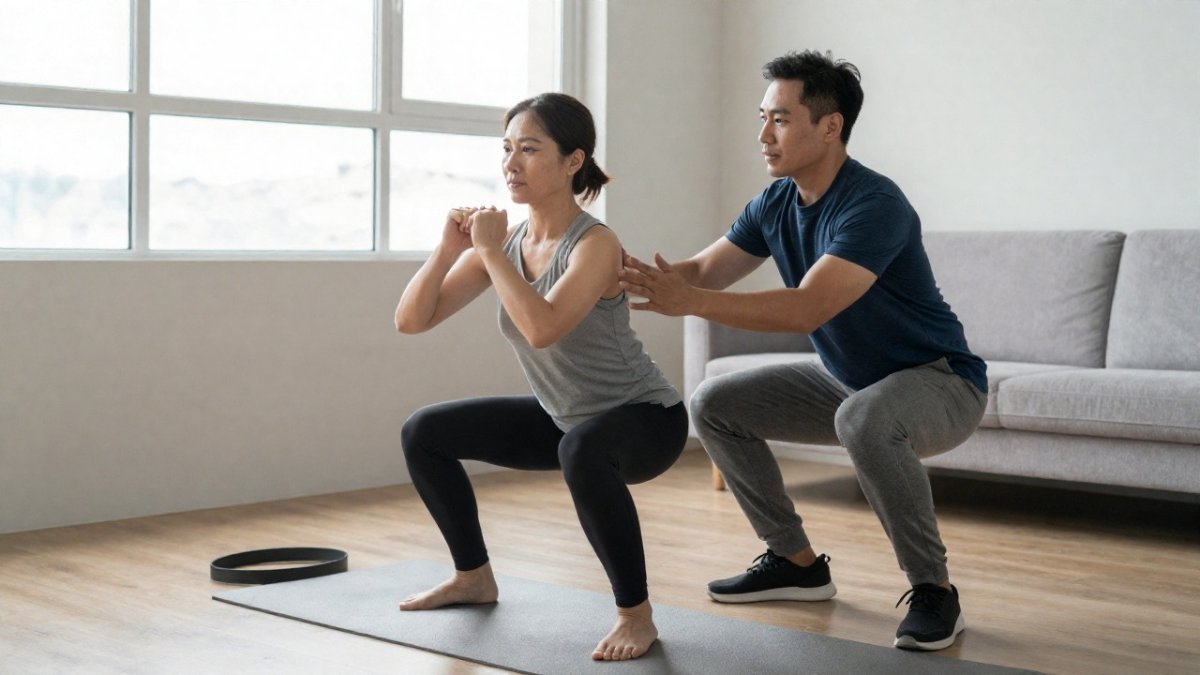
Watch out: skipping the health history conversation is the most common beginner mistake. If you manage high blood pressure or another condition, your trainer needs that information before the first set, not after.
Beginners can see what the process looks like from day one on our client journey page.
Building a Weight Loss Workout Plan That Fits Your Life
A weight loss workout plan works when it survives a bad week. That means realistic session lengths, a schedule built around your household, and a plan B for days that fall apart.
Structure the week around three priorities: strength training to protect muscle, cardiovascular exercise for energy expenditure, and recovery so you can repeat it. Sustainable weight loss comes from the calorie deficit you can hold, not the one you can survive for ten days.
Here is an example week for a beginner training three days a week:
| Day | Session | What It Looks Like |
|---|---|---|
| Monday | Full-body strength | Squat or leg press, push-up or chest press, row, hinge, core; 2-3 sets of 8-12 reps |
| Tuesday | Walk or easy cardio | 20-30 minutes at a conversational pace |
| Wednesday | Rest or mobility | Light stretching, 10 minutes of walking |
| Thursday | Full-body strength | Same movement patterns, different variations; add a small amount of load if form holds |
| Friday | Moderate cardio | 20-30 minutes, bike or brisk walk |
| Saturday | Active recovery | Walk, yard work, or a hobby that involves moving |
| Sunday | Rest | Full recovery day |
Progression follows a simple rule: add a little load or a rep before you add a day. Hold the schedule for four weeks, then reassess. If you miss a session, pick up at the next one rather than doubling up.
Watch out: stacking hard cardio on top of strength sessions on back-to-back days early on is the most common way beginners burn out or pick up a nagging joint issue. Recovery is part of the plan, not a break from it.
Strength Training, Cardio, and Muscle Building in One Plan
Strength training does the muscle-building work that keeps metabolism from sliding during weight loss. Cardio adds calorie burn and conditioning. Together they beat either one alone.
A practical split for most beginners:
- Two full-body strength sessions per week
- Two moderate cardio sessions, 20-30 minutes
- One mobility or active recovery day
- Daily walking as baseline physical activity
Exercise variations matter more than intensity early on. Rotating movement patterns keeps joints happy and prevents the plateaus that come from doing the same routine for months. If you want meal-plan details to pair with training, review our meal plan information.
How Often Should You Work Out to Lose Weight?
Three to four training sessions per week is a commonly suggested frequency for many people pursuing fat loss. That frequency can support consistency, allow recovery, and fit around work and family schedules.
More isn't automatically better. Training five or six days a week before you've built the habit usually ends in a missed week, then a missed month. Start at three, hold it for a month, then add.
Workout frequency should rise with your fitness level, not your motivation on a good day. Training intensity follows the same rule: progress load or duration gradually, and back off when sleep and stress are poor.
| Experience Level | Sessions per Week | Session Length |
|---|---|---|
| Beginner | 2-3 | 30-45 minutes |
| Intermediate | 3-4 | 45-60 minutes |
| Advanced | 4-5 | 45-75 minutes |
Sessions per Week
How to Choose a Trainer and What to Expect From Coaching
Choosing a trainer comes down to credentials, scope, and fit. Ask what certification they hold, how they program for health conditions, and what happens when something feels wrong during a session.
Practical Fitness uses the Optimum Performance Training model to build customized plans for each client.
Questions to Ask About Certifications and Safety
Ask these before you book:
- Which certification do you hold, and is it current?
- How do you adjust exercises for high blood pressure or joint issues?
- What's your process when a client reports pain?
- Do you provide nutrition guidance, and where does your scope end?
- How do you track progress beyond the scale?
- What's your cancellation policy?
On nutrition: a trainer can guide habits and refer you onward when a case needs a registered dietitian.
You can see the actual training services we offer on our services page before deciding whether coaching fits.
Generic apps and YouTube routines quit on you because nothing adjusts when your week breaks. Practical Fitness builds in-home personal training around your schedule, your health history, and your goals, using the Optimum Performance Training model with customized workout and nutrition plans from a certified N.A.S.M. trainer. We focus on habits you can hold for life, not a six-week sprint. Get started with Practical Fitness and build a plan that survives real life.
Frequently Asked Questions
Can a personal trainer help you lose weight?
A trainer can build the structure weight loss needs: a customized workout plan, progress tracking, and accountability that keeps you consistent. The trainer supplies the plan and the follow-through; the calorie deficit still comes from your daily habits. Expect coaching to support weight loss, not replace the work.
How often should I work with a personal trainer to lose weight?
Two to three sessions per week is a common starting point for beginners, with independent activity on the other days. That frequency lets your trainer teach proper form, adjust training intensity, and spot plateaus without overwhelming a body that is new to structured exercise. As your fitness level rises, many people drop to one or two sessions weekly and train solo in between. Your trainer should map frequency to your schedule, recovery, and weight-loss goals rather than a fixed template.
Can I lose weight with a personal trainer if I am new to exercise?
Yes. Personal training for beginners generally starts with a fitness assessment, then builds an exercise program around your current fitness level and any health conditions. A certified trainer can adjust exercise variations and intensity to help you progress safely. If you manage high blood pressure or other health markers, tell your trainer and your doctor before starting so the plan accounts for safe exercise. The first weeks focus on form, consistency, and healthy habits, not maximum calorie burn.
How do I choose a personal trainer for weight loss?
Check certifications first, such as NASM, and ask how the trainer programs for your health history, injuries, and goals. Ask about session format, cancellation policy, and how progress tracking works beyond the scale, including body composition and measurable progress on strength and mobility. Request a consultation and watch how the trainer listens. A good fit means the plan reflects your schedule and comfort level, and the trainer explains the reasoning behind each exercise rather than running a generic routine.
